

Moving drums through a warehouse or manufacturing plant may seem straightforward until the task requires more than rolling a container across a floor. A full drum can weigh hundreds of pounds, and improper handling can slow production, damage materials, or create unnecessary strain for employees. The right equipment helps teams move, lift, position, and dispense from drums with greater control.
Choosing the right solution starts with understanding the work itself. Project managers need to consider the drum, the load, the path of travel, and how employees interact with the container throughout the day. A tool that works well for one application may cause problems in another. Here’s how to choose the right drum-handling equipment.
Identify the Drum Type
Before comparing equipment, identify the drum types employees handle most often. Steel, plastic, and fiber drums can differ in weight, rim design, wall strength, and handling requirements. These differences determine which lifters, grabbers, trucks, or dollies can hold the container securely.
Capacity deserves close attention. A 30-gallon drum presents different handling requirements than a 55-gallon drum, and the contents can dramatically change the total load. Project managers should know both the drum dimensions and the maximum loaded weight before selecting drum-handling equipment.
Define the Movement
Next, consider how the drum moves through the facility. Some teams only need to move drums across a level floor, while others need to lift drums onto pallets or position them at a workstation.
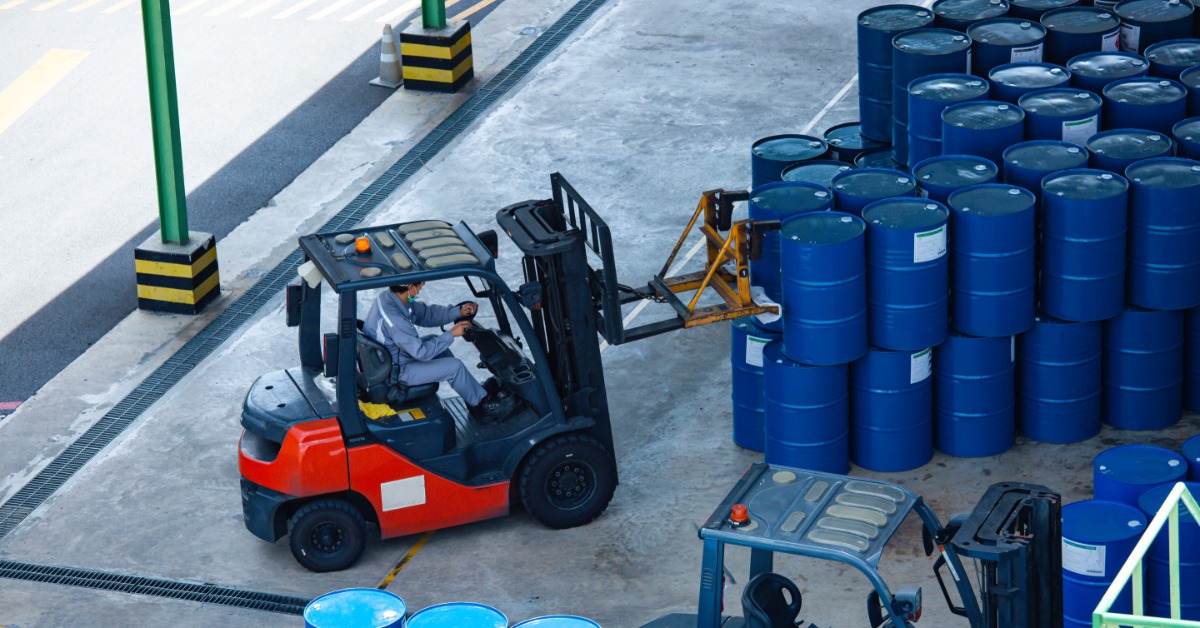
A drum dolly may work well when employees move containers short distances across smooth floors. A drum truck can give operators more leverage when they need to tilt and transport upright drums. Forklift attachments can help teams lift or reposition drums without adding another dedicated powered vehicle.
Project managers should map the full movement rather than focusing on a single step. If a drum moves from receiving to storage and later reaches production, each stage may create different handling requirements. A solution that supports the entire route can reduce repeated transfers.
Review Lifting Requirements
Horizontal movement only solves part of the problem in many facilities. Teams often need to raise drums from the floor, place them on pallets, or position them for dispensing.
The required lift height should guide equipment selection. A low-profile drum lifter may suffice for floor-level positioning, while another application may require a hoist attachment or a forklift-mounted device. Project managers should also consider how often employees perform the lift.
Consider Drum Orientation
Facilities don’t always keep drums upright. Some processes require operators to tilt or rotate a drum. Others place drums horizontally on racks or stands for dispensing.
The orientation changes the type of handling equipment employees need. A drum rotator can help operators control the container as they turn it. A cradle can support a drum during horizontal storage or dispensing. A grabber that only lifts drums vertically won’t solve those tasks.
Project managers should review what happens after employees move the drum. If the process ends with pouring or dispensing, the equipment should support that final step.
Match the Environment
Facility conditions affect drum movement more than many teams expect. Floor surfaces, aisle widths, thresholds, and congestion all influence how easily employees maneuver a loaded drum.
Wheel selection becomes especially important for hand trucks and dollies. A wheel that rolls smoothly across polished concrete may perform differently over rough surfaces or floor joints. Compact equipment may also fit narrow work areas more effectively.
Project managers should check the available turning radius. A drum truck that works well in an open shipping area may feel awkward in a tight production aisle. Comparing the route with the equipment dimensions can reveal problems before daily use begins.
Check Attachment Compatibility
Many plants already use forklifts or hoists. In those cases, a compatible drum attachment may solve the handling problem without adding another powered machine.
Forklift drum grabbers can allow operators to lift drums while using equipment they already know. Some attachments grip the drum rim as the forks approach the container. Others use a different connection method.
Compatibility goes beyond fork dimensions. Project managers need to consider attachment weight and forklift capacity. The attachment changes the overall lifting configuration, so teams should review equipment ratings before use.
Think About Frequency
The number of drum moves per shift can change which solution makes sense. An employee who moves one drum every few days has different needs from a production team that handles drums throughout every shift.
High-frequency applications benefit from equipment that minimizes repeated manual positioning. Easy engagement and smooth maneuvering can save time across many movements. In lower-frequency applications, simplicity may provide more value than speed.
Project managers should observe the process before selecting equipment. Employees often reveal workflow obstacles that aren’t visible on a floor plan. Observing how operators approach a drum and where they stop can help managers choose equipment that fits daily work.
Account for the Contents
The material inside the drum adds another layer to the decision. Liquids can shift as employees move the container, which can affect stability. Powders or solids may behave differently during tilting or rotation.
Some contents also require careful spill control. In these settings, project managers may want equipment that limits unnecessary tilting and gives operators precise control during positioning. Facilities should follow internal handling procedures and any requirements that apply to the material.
The contents also influence dispensing. A process that relies on pumps may keep the drum upright, while a process that uses gravity to dispense material may require a horizontal cradle.

Evaluate Operator Effort
Good equipment should make the task easier to control without introducing complicated steps. Project managers should consider how much force employees need to start, stop, tilt, and steer a loaded drum.
Handle height and wheel configuration can affect the experience. The same applies to engagement mechanisms on lifters and grabbers. Equipment that requires awkward positioning may create frustration even when its rated capacity fits the load.
Plan for Long-Term Use
Industrial handling equipment faces repeated impacts, heavy loads, and constant movement. Project managers should look beyond the initial purchase and consider how the equipment will perform after months of use.
Replaceable wheels, accessible components, and durable construction can simplify maintenance. Facilities should also regularly inspect handling equipment and remove damaged tools from service before they cause a larger problem.
Storage deserves some thought as well. A drum truck or attachment that blocks an aisle when not in use can create another obstacle.
Choose Around the Work
When you want to choose the right drum-handling solution should match the drum and the way employees move it through the facility. Project managers can narrow the options by starting with real load information, lift requirements, travel conditions, and the drum’s final use.
A well-chosen tool can reduce unnecessary handling while giving operators more control over heavy containers. It can also help warehouses and manufacturing plants create a smoother path from receiving to production.
F.E. Bennett works with drum trucks, dollies, lifters, grabbers, and related material handling solutions. Understanding the application first makes it easier to identify equipment that supports the facility’s workflow and stands up to everyday industrial use.